

Palha Italiana
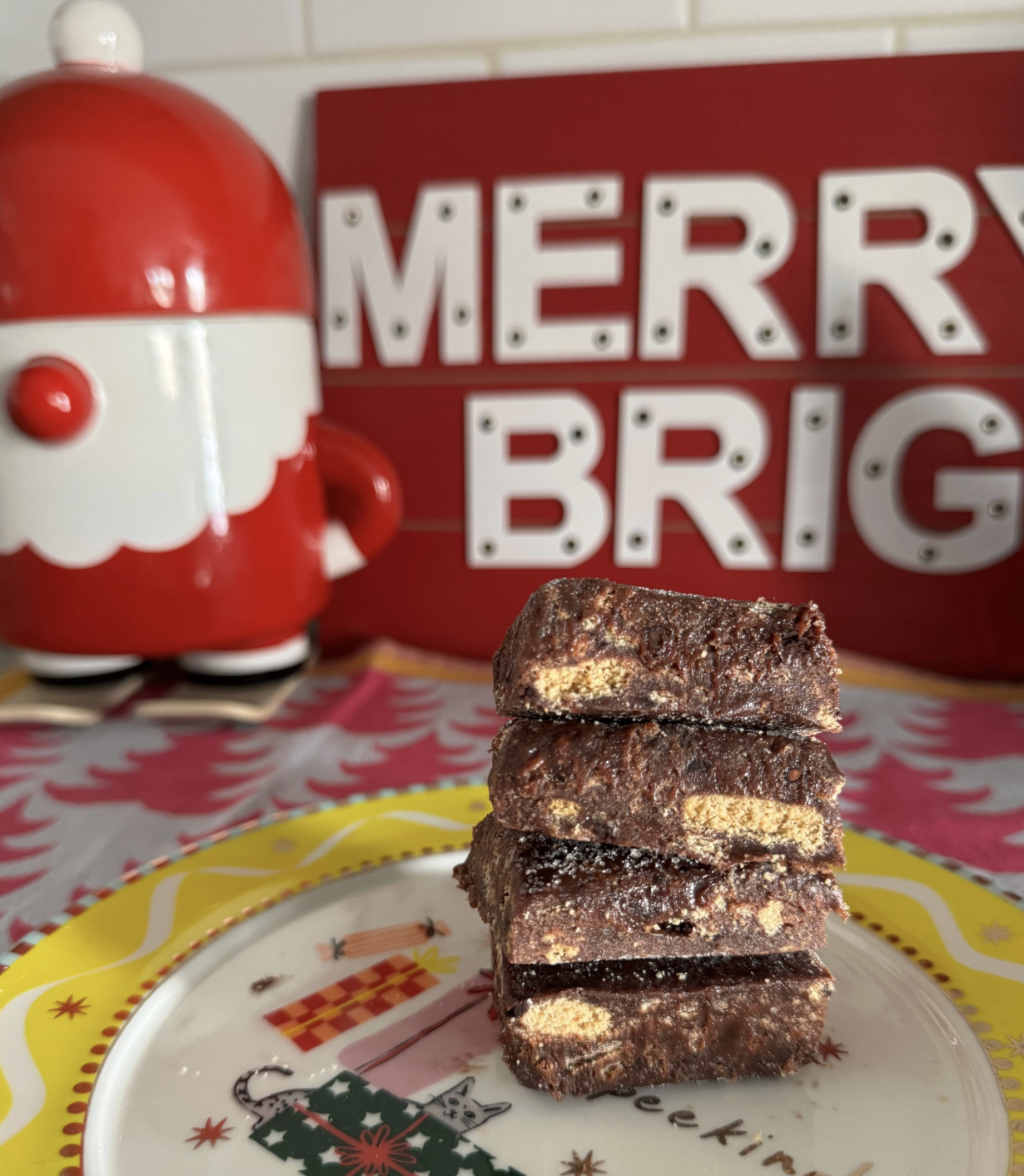
On Christmas Eve circa 1995, I arrived at my aunt’s house to find four identical mysterious gifts under the tree. My sister and I, and our two cousins, eyed them with intense curiosity. When the time came to choose our first gift, we knew exactly what we wanted to open. The gift was shaped like a can of Nescau, the Brazilian chocolate powder, and indeed these were those very cans. This was back when they still had a metal pop-off top, and they had been decorated with paper and ribbon by my grandmother who then filled each one with individually wrapped rectangles of Palha Italiana. For the entirety of my little life until this point, I had never had anything like this Brazilian-Italian dessert. Brigadeiro enveloped cookies in a fudgy, crunchy, irresistible truffle. We each delighted in our private stash until the floor was covered in wrinkled, chocolate-stained wrappers. My grandmother could never afford to buy expensive toys, and yet she managed to give me the most memorable gift of my entire childhood.
When I started The Rio Kitchen I had a mission to document my family recipes. This turned out to be harder than I ever imagined. My grandmother’s recipe books are basically notes to herself. It’s less of a manual and more a source of inspiration. Exhibit A is her original recipe for Palha Italiana, which she called Centro de Rosas
Personally, I thought its obscurity from our lives meant this was too difficult to make (it’s not). Without a proper recipe, or our grandmother around, and maybe feeling intimidated by how much this dessert means to us, no one in the family attempted to make this after that Christmas. Until me, my mission, and The Rio Kitchen, came along. Turning this food memory into an actual recipe feels emotional. This is what I am meant to do, and I am actually doing it.
Palha Italiana was created by Italian immigrants in Southern Brazil, an adapted version of Salame de Cioccolato, or Chocolate Salami. The chocolate was replaced with brigadeiro, adapted to our ingredients and habits in Brazil, and a common household graham-style cracker was included in place of nuts and dried fruit. We shape ours into rectangles and cut them into individual pieces.
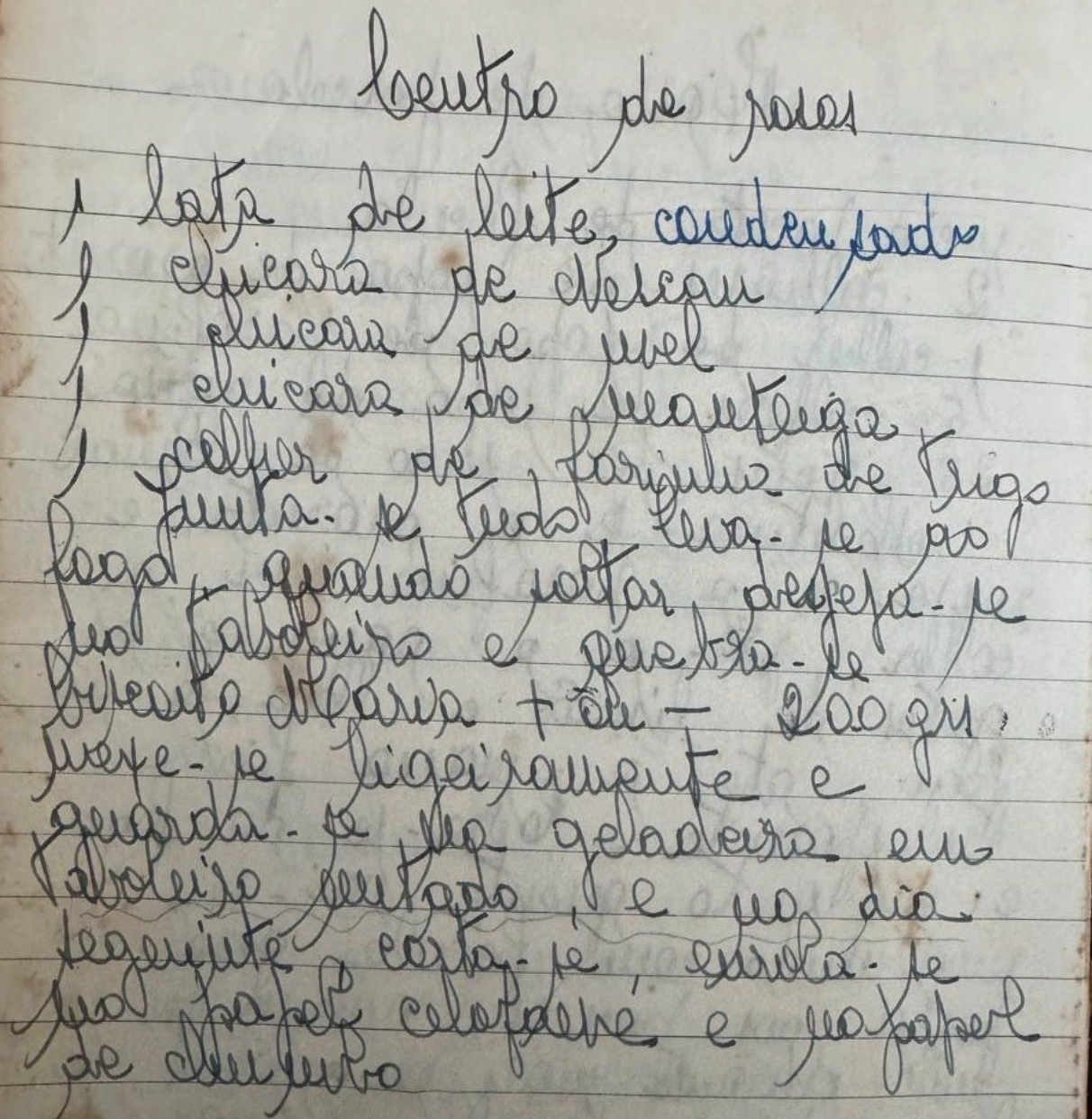
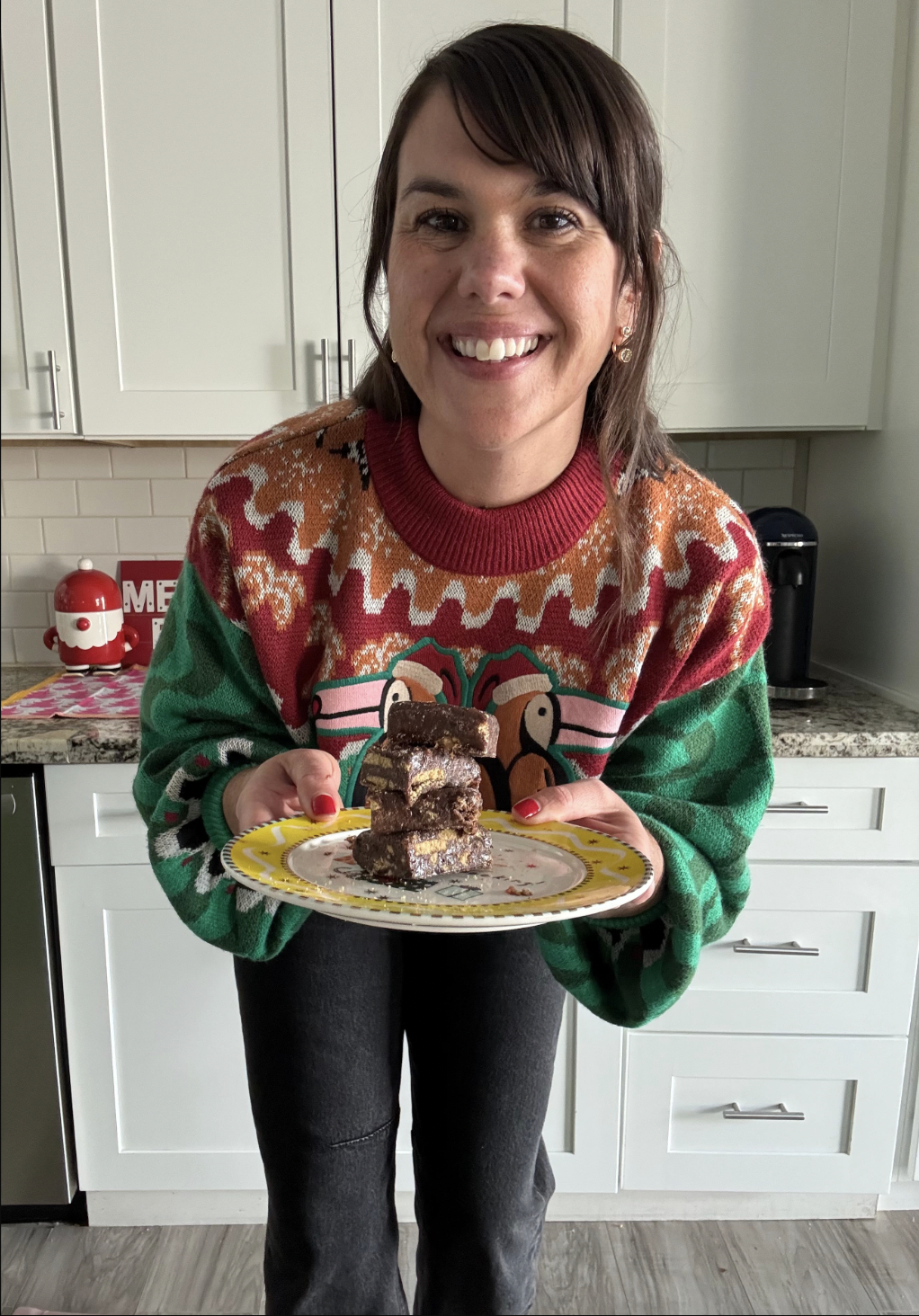
My recipe was put together from my grandmother’s notes, my aunt’s memory of her making it, and an extensive research on methods. For the cause, I added a hot hiit/pilates class to my workouts, and made repeated trays of Palha Italiana until I got this right.
While not a Christmas cookie persay, I always associate this truffle with this time of year. From now on I can make it and honor my grandmother, and the sweetest (no pun intended) Christmas memory I cherish.
Equipment:
Medium-Sized Bowl
Medium Sized Saucepan
Spatula
8x8 Baking Dish
Parchment Paper
Ingredients:
2 tablespoons of unsalted butter
2 cans of condensed milk
5 tablespoons of cocoa powder
1 tablespoon of honey
5 ounces (about 150 grams) of graham crackers
1/2 cup of sugar for coating
Servings: 20 Cookies
Active time: 40–45 minutes
Total time: 8½–9 hours (includes overnight chilling)
Steps:
Break up graham crackers in a bowl into 1/2 inch squares or slightly bigger.
In a medium-sized saucepan melt the butter on medium low heat. Add the condensed milk, the chocolate, and the honey. Let it get warm and incorporated for 2-3 minutes.
Turn the heat to medium-high and keep stirring the chocolate mixture with a spatula for 10 minutes trying to break up lumps of cocoa. Switch to a whisk for a few seconds if you still see chocolate powder after a few minutes. Don’t worry about this too much, it will eventually settle. No matter what happens, do not walk away from this saucepan. Just. Keep. Stirring.
Once it starts to bubble, stir more vigorously, scraping the sides and bottom. If your bubbling seems too intense (i.e splashing), turn down the heat a notch. When scraping the bottom of the pan with a spatula leaves a clear path, your chocolate is ready or as we say, no ponto.
Remove the pan from the heat and add the broken up graham crackers to the saucepan. Stir *very gently* to incorporate without breaking up the crackers. Remember… do not walk away from this saucepan. If you wait too long and the chocolate mixture starts to cool, it’s going to be nearly impossible to incorporate the crackers without crumbling them.
Line an 8x8 baking dish with enough parchment to come over the sides and pour the mixture in. Cover with another piece of parchment, give it a gentle press to spread evenly, and put in the fridge overnight. Now please enjoy any chocolate left on the spoon, in the pan, or both, like any Brazilian would.
If you were able to wait until the next day (some of us have to peek before going to bed), remove the block from the fridge, pull it out of the baking dish onto a cutting board, and remove the paper. Cut the block into 20 squares. Put the sugar in a bowl and roll each square to coat. The wait was long, but now it’s time to enjoy one. Some of us enjoyed three.
Serving Suggestion
Store at room temperature for 2 days or in the fridge for up to 5 days. If refrigerated I would bring to room temperature for 30 minutes before eating for the best possible experience. It won’t be bad (never), but the chocolate texture will resemble more caramel than fudge.
For a video of this recipe click Here